Footprints
Follow the tracks of those who came before you.
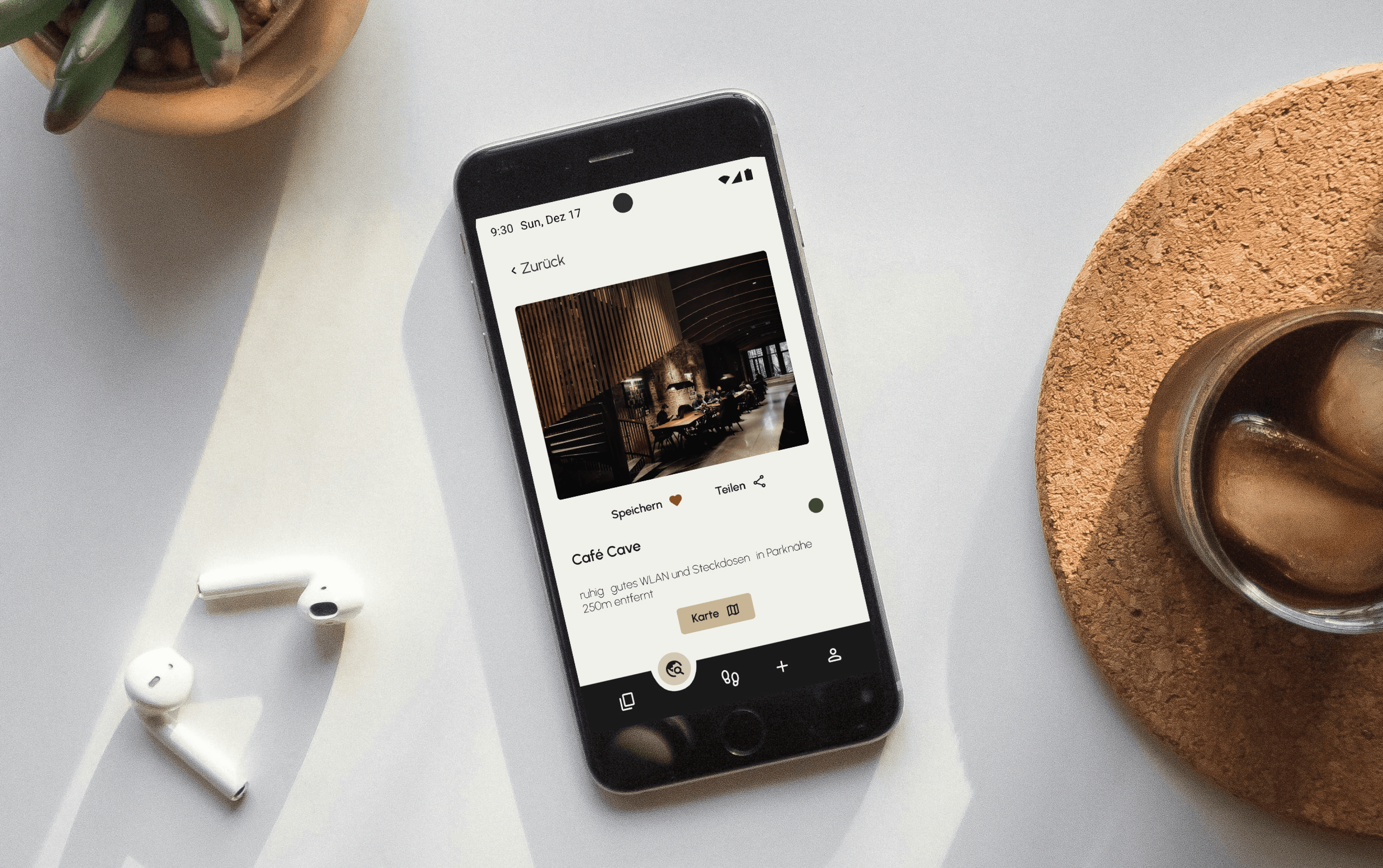
Footprints is a travel companion app designed for people who move frequently between countries. The project covers the full design process from initial research and storyboarding to lo-fi wireframes, UX concept, UI design, and an interactive Figma prototype with clickable user stories.
Context
Academic project brief: Lost in Translation. The challenge was to design a solution that helps people navigate a foreign country. Whether before departure, on the road, or after arrival. Having traveled frequently for work myself, I know firsthand how hard it can be to find reliable, practical information fast. That's why I focused on freelancers, digital nomads, and business travelers: people who need more than a tourist guide.
The Process
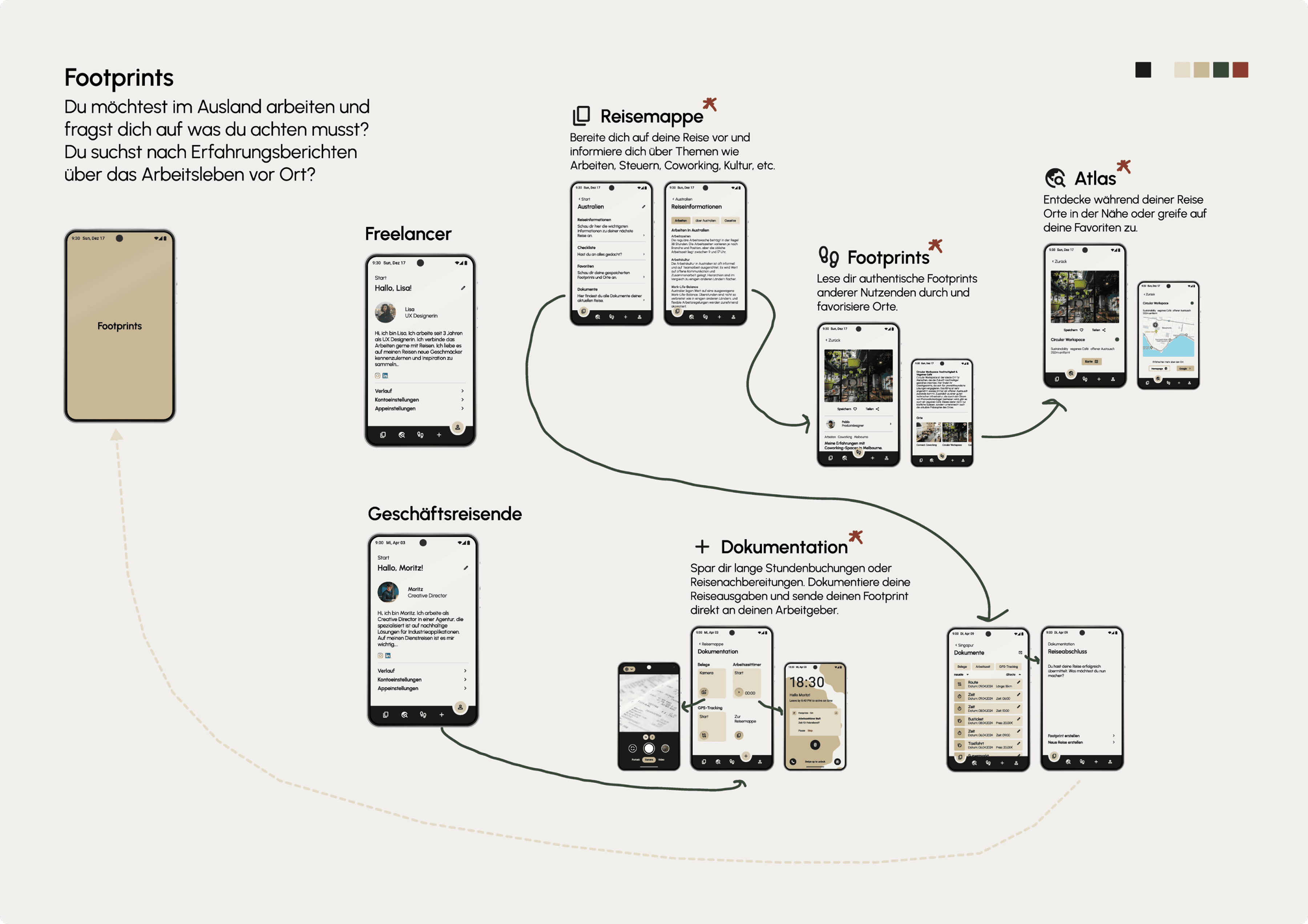
Starting with a broad market analysis, I clustered existing apps like Pinterest, Kitchen Stories, Airbnb, and GetYourGuide, looking at both functionality and design patterns. The research revealed gaps, but what was missing most was a coherent story. That story came on a walk: Footprints. Following in the footsteps of others.
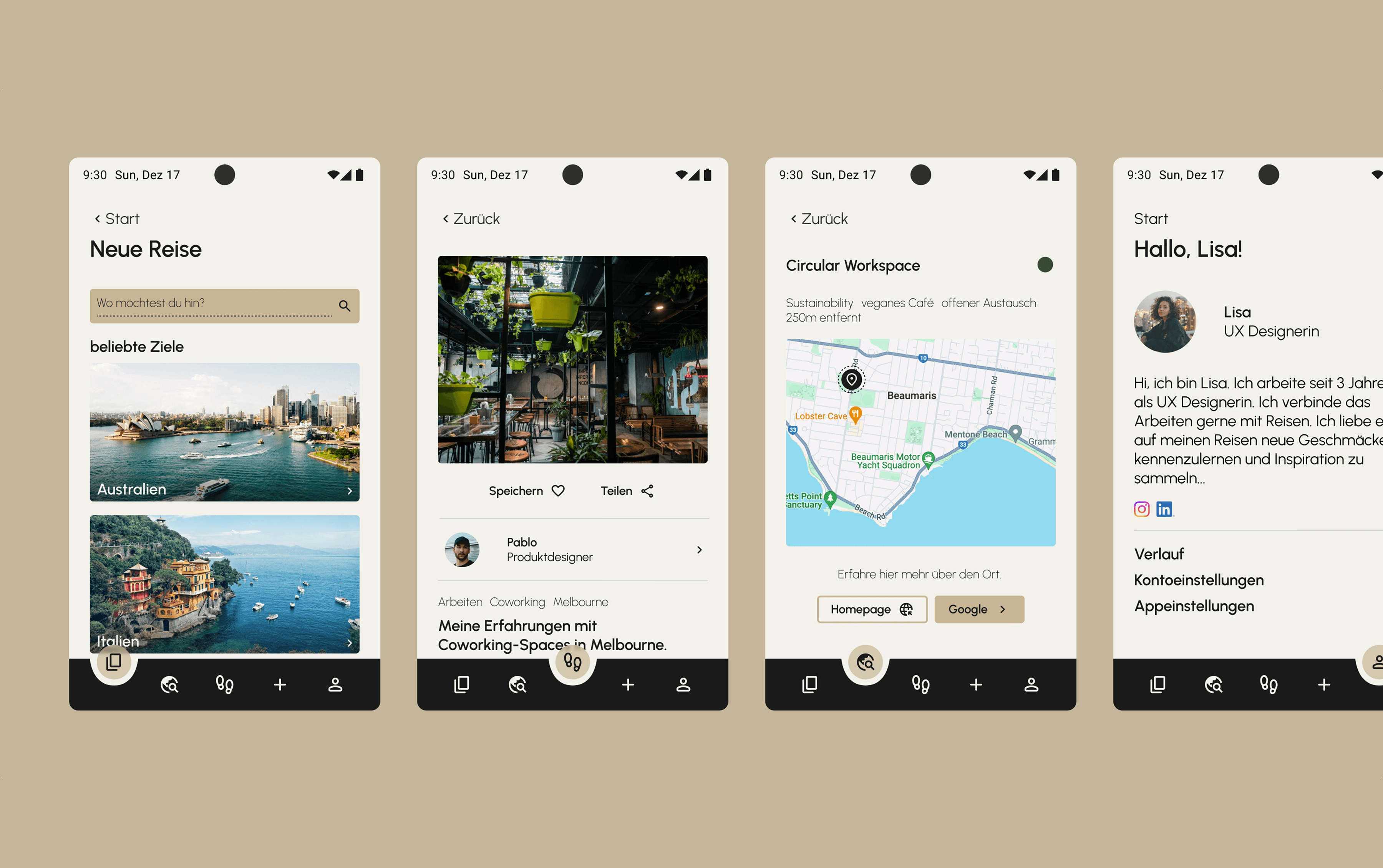
From there, the concept shaped itself around three core features inspired by physical objects every traveler knows. The Travel Folder brings together all trip-relevant information in one place: visa requirements, tax regulations, important checklists, and documents. The Atlas works like a map, showing the footprints left by other users — unfiltered recommendations for cafés with good Wi-Fi, coworking spaces, restaurants, cultural spots, and more. These Footprints can be saved directly into the Travel Folder, making it easy to prepare thoroughly before even boarding a flight. A Pro version extends the experience for business travelers, adding expense tracking and document management, a feature born directly from my own experience on the road. Storyboards and lo-fi wireframes led through multiple design iterations, eventually landing on a neutral, sand-toned palette accented by signal colors.
Key takeaways
Storytelling turned out to be one of the most powerful design tools in this project. Having a clear concept created both focus and direction throughout the entire process. I also learned that fewer, well-defined features make for a more compelling product than a long feature list. And perhaps most importantly: the best ideas often happen away from the screen.
Year
2023
Service
User Research
Prototyping
Brand Design
UX/UI Design
Type
Academic
